


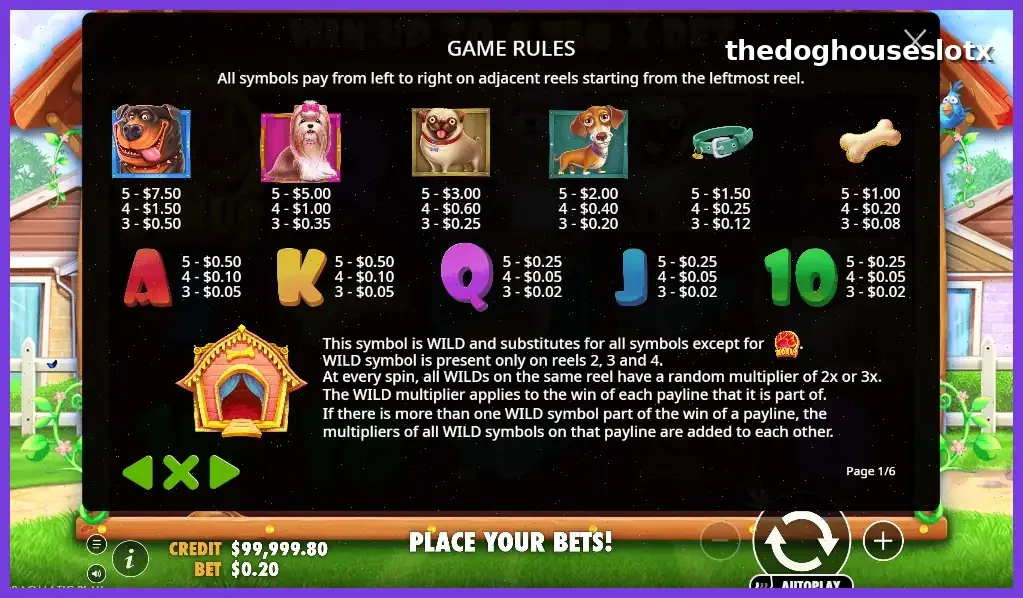
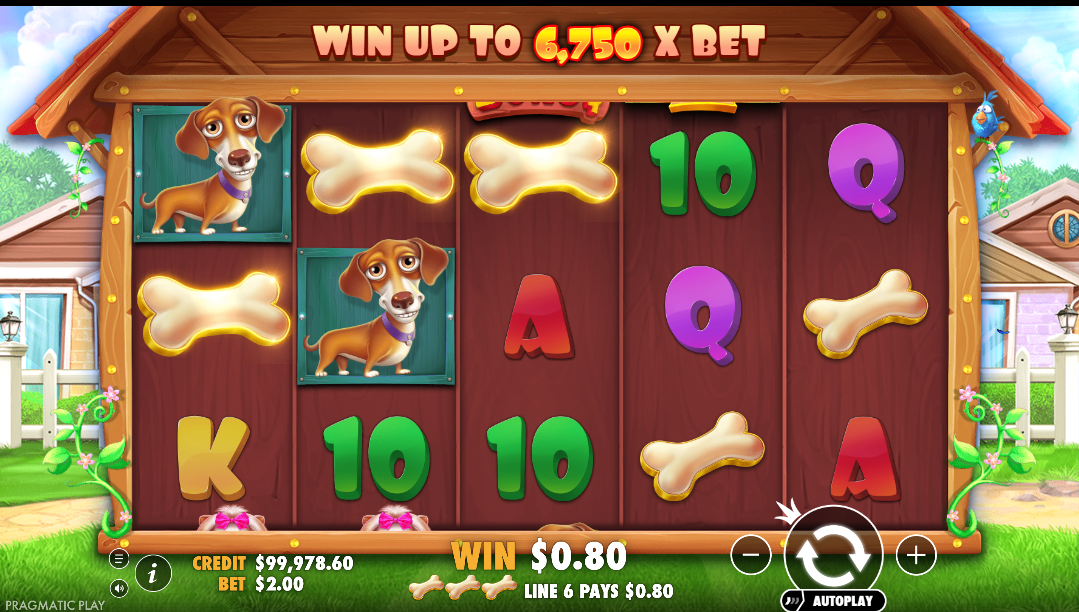
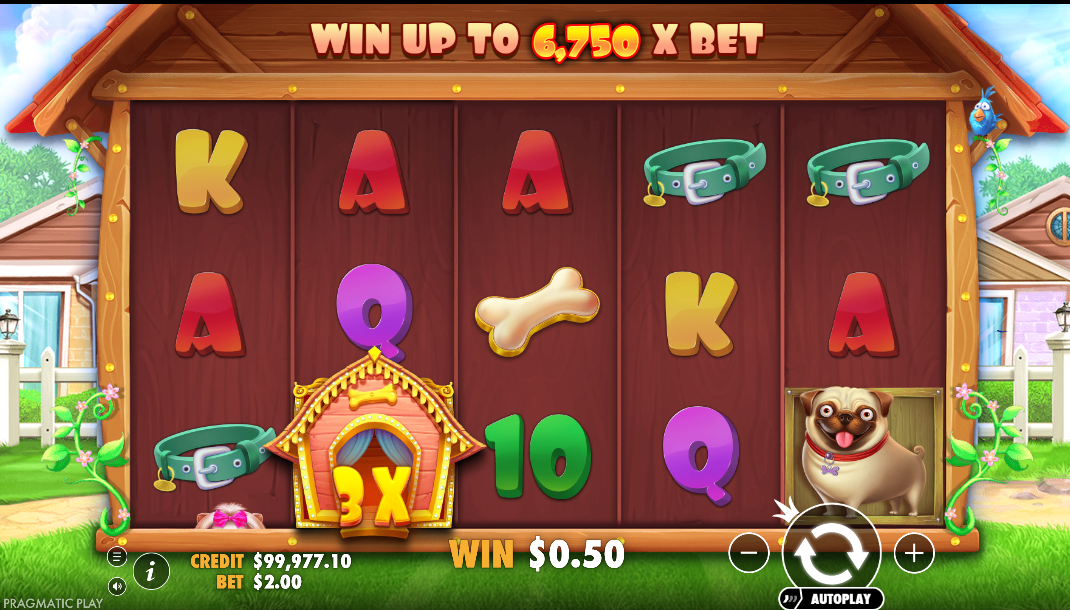
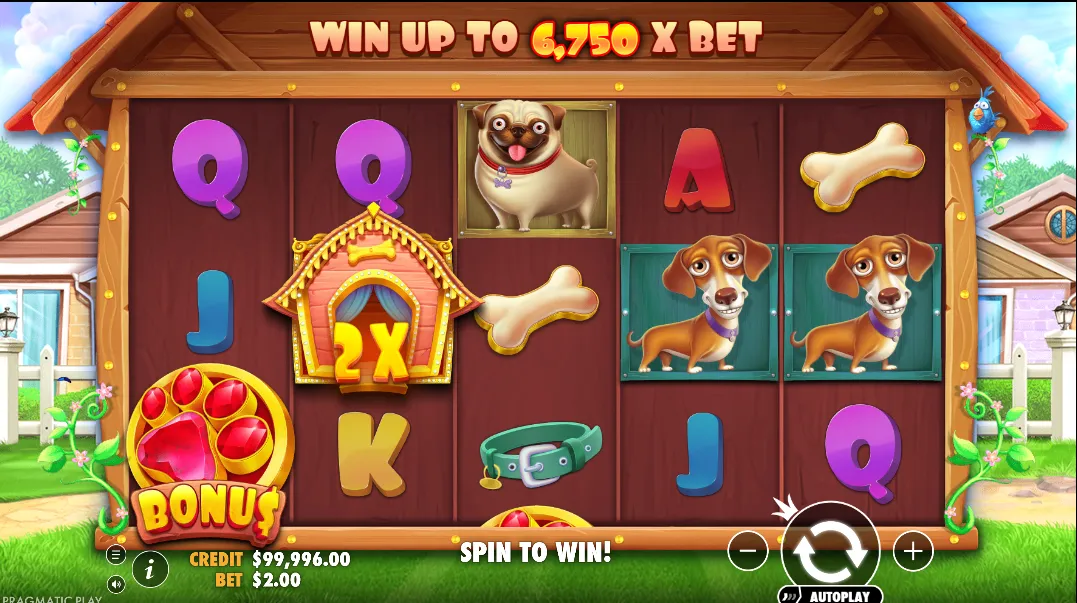
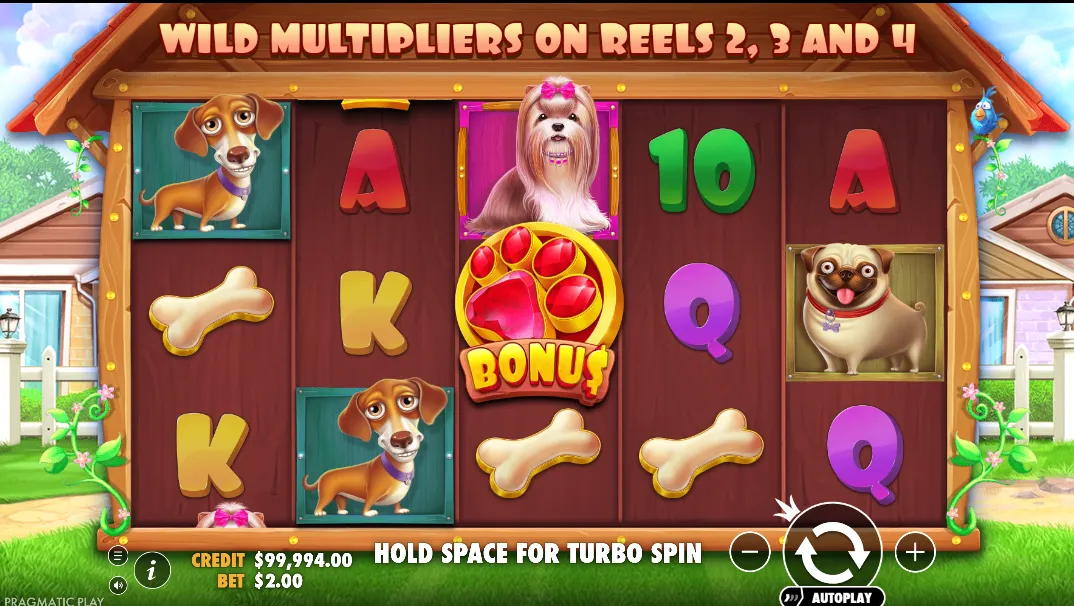
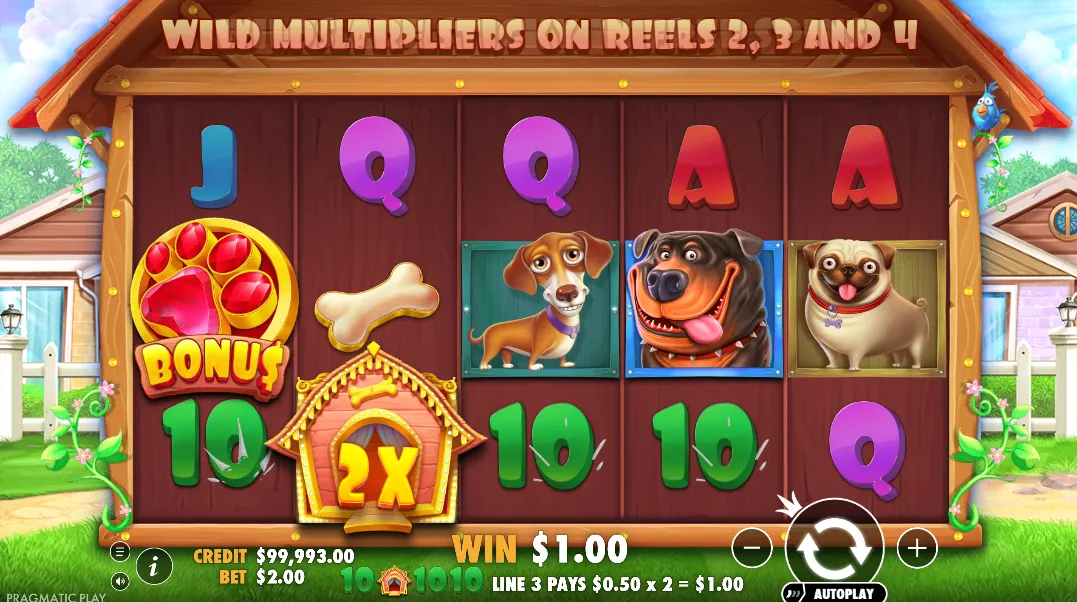
When evaluating any modern online slot, I begin with its demo mode. The Dog House 2 Slot demo is not a simplified teaser — it is a fully operational simulation of the real-money version. Every mechanic, multiplier interaction, and volatility structure is preserved. The only difference is the absence of financial risk.
For players exploring high-volatility titles, demo mode serves as a practical analytical tool. It allows observation of multiplier stacking behavior, Free Spins volatility shifts, and payout rhythm without emotional pressure or bankroll impact.

The Dog House 2 Slot demo replicates:
• 5×3 reel structure
• 20 fixed paylines
• Sticky Wild multipliers
• Three selectable Free Spins modes
• RTP configuration up to 96.55%
The mechanics are mathematically identical. That consistency is essential for transparency and player understanding.
Below is a modern breakdown of Demo vs Real Mode presented in structured comparison cards.
Volatility Observation in Demo Play
The Dog House 2 Slot is classified as high volatility. This means payout frequency is lower, but win potential increases significantly during multiplier stacking events. Demo mode makes these patterns easier to study.
Below is a modern volatility visualization with a clear legend.
The Dog House 2 Slot operates in the high-volatility category. During demo sessions, players can observe how Sticky Wild multipliers remain fixed in Free Spins and how stacked multipliers dramatically increase win exposure.
Strategic Value of Demo Mode
Free play offers three distinct advantages:
- It reveals volatility rhythm.
- It demonstrates multiplier escalation behavior.
- It allows evaluation of Free Spins mode selection without risk.
Understanding these structural elements before wagering real funds can significantly improve informed decision-making.
Free Spins Structure in Demo Mode
When four Scatter symbols appear, players can choose one of three configurations. Each mode adjusts the balance between spin count and multiplier intensity.
Below is a modern comparison overview of the three bonus options presented in structured feature cards.
Testing these three modes in demo format reveals how variance concentrates differently depending on selection. Shorter bonus rounds tend to generate sharper multiplier spikes.
Multiplier Stacking Behavior
Sticky Wilds land with multipliers ranging from 2x to 5x. During Free Spins, they remain fixed and can stack when multiple Wilds occupy the reels simultaneously.
Below is a modern visual representation of multiplier escalation.
As shown above, multiplier exposure grows non-linearly. Demo sessions often demonstrate how quickly payout potential shifts once two or more Sticky Wilds lock into position.
Practical Observations from Demo Testing
From repeated demo simulations, three consistent patterns emerge:
• Base game wins remain moderate and irregular
• Bonus rounds drive the majority of value exposure
• Extreme Mode creates the highest payout variance
Demo mode provides clarity. It reveals how the slot behaves mathematically rather than emotionally.
The Dog House 2 Slot rewards patience and tolerance for variance. Demo play gives players the opportunity to understand this rhythm before transitioning to real-money gameplay.
After testing the Free Spins modes individually, the next step in any structured review is extended simulation. Demo mode allows players to run longer sessions and observe how volatility unfolds across time rather than isolated bonus rounds.
High-volatility slots rarely display smooth balance progression. Instead, they move in cycles: minor dips, moderate recovery, sharp bonus spikes, and sometimes extended neutral stretches.
Session Behavior in Demo Mode
When running extended demo sessions (200–500 spins), three patterns consistently emerge:
• Base spins maintain low-to-moderate return rhythm
• Balance declines gradually before bonus activation
• Significant upward spikes occur only during strong multiplier stacking
This cyclical pattern is typical of multiplier-driven Slots, where most theoretical return is embedded in Free Spins rather than base gameplay.
Below is a structured summary of session phases during demo testing.
Linear Variance Visualization
To better understand this behavior, we can visualize a typical demo session using a linear performance graph. This example reflects a simulated 300-spin session in high-volatility conditions.
In this example:
• Early spins show gradual decline
• Mid-session bonus activation causes partial recovery
• Late-session multiplier stacking results in sharp upward correction
This shape is typical of high-volatility mathematics. The curve is not smooth; it is episodic.
Bankroll Modeling in Demo Play
While demo mode uses virtual credits, it still allows accurate volatility observation. Long sessions demonstrate that:
• The base game alone rarely sustains balance growth
• Bonus selection impacts spike frequency
• Extreme Mode increases amplitude of balance swings
Linear modeling reveals how return concentration works. Instead of frequent small gains, The Dog House 2 Slot produces episodic performance peaks.
What Demo Mode Truly Teaches
Extended demo sessions reveal three core truths about this slot:
• The majority of value sits inside Free Spins
• Multiplier stacking drives exponential payout potential
• Volatility can produce long neutral or declining stretches before major spikes
These insights allow players to approach the live version with realistic expectations rather than assumptions based on short-term outcomes.
Below is a structured comparison of Demo Learning vs Live Application presented in modern card format.
Responsible Transition to Real Play
Demo testing reduces impulsive decision-making. Players who understand the slot’s volatility profile are less likely to misinterpret normal variance as malfunction or imbalance.
When transitioning to real sessions:
• Start with conservative bet sizing
• Avoid chasing multiplier spikes
• Remember that RTP operates long-term, not per session
• Recognize that bonus selection increases risk concentration
The Dog House 2 Slot is not designed for steady incremental growth. It is structured for episodic payout events driven by Sticky Wild stacking. That design does not change between demo and live modes.
Competitive Context in the Broader Market
In the wider ecosystem of online Games, The Dog House 2 Slot belongs to the high-volatility multiplier segment.
Compared to traditional table formats such as roulette or poker, this slot offers no strategic decision layer beyond bet sizing and bonus mode selection. Unlike progressive jackpot Slots, it delivers large win potential without pooled prize mechanics.
Its identity rests on:
• Recognizable thematic branding
• Clear volatility segmentation
• Transparent bonus structure
• Strong multiplier-driven mechanics
Demo mode highlights these structural elements clearly.
Long-Term Sustainability
From a design standpoint, The Dog House 2 Slot maintains replay value because its volatility structure remains consistent. Players who understand its mechanics tend to engage with it intentionally rather than impulsively.
Demo access strengthens long-term sustainability by:
• Increasing player transparency
• Reducing unrealistic expectations
• Allowing informed gameplay decisions
Identifying Player Compatibility
High-volatility slots generate uneven reward distribution. Players who prefer constant reinforcement may feel uncomfortable with extended neutral phases. Conversely, those who enjoy peak-driven excitement may find the structure highly engaging.
Below is a structured compatibility overview presented in modern card format.
Advanced Demo Testing Approach
To extract meaningful insight from demo sessions, random short testing is insufficient. Structured observation is more effective.
A recommended demo evaluation process includes:
• Testing all three Free Spins modes separately
• Tracking approximate spin count before bonus triggers
• Observing multiplier stacking distribution
• Comparing perceived volatility between sessions
Because the slot’s mathematical model remains constant, repeated demo sessions tend to reveal similar volatility architecture, even if short-term results vary.
Multiplier Psychology in Demo Mode
Sticky Wild multipliers create anticipation amplification. Even in demo sessions, players often experience heightened engagement when two or more Wilds lock in place.
However, demo play provides emotional distance. This separation allows clearer observation of how:
• Multiplier exposure builds gradually
• Bonus rounds sometimes underperform expectations
• Extreme Mode concentrates risk into fewer spins
Recognizing these patterns before wagering real funds improves decision discipline.
Position Within the Modern Slot Landscape
The Dog House 2 Slot demo illustrates the broader evolution of feature-driven Slots. Modern slot design emphasizes:
• Bonus selection control
• Persistent multiplier mechanics
• High volatility identity
• Thematic branding consistency
Compared to traditional reel-based formats with static paylines, multiplier-based titles demand greater volatility awareness. Demo mode supports that awareness.
Long-Term Value of Demo Access
The true benefit of demo mode is not entertainment alone — it is education. When players understand volatility structure, they reduce misinterpretation of normal variance.
Structured demo testing leads to:
• More accurate expectations
• Better session planning
• Reduced emotional decision-making
• Improved alignment between player preference and game design
The Dog House 2 Slot demo fulfills its role effectively. It mirrors the live game with precision, allowing players to study mechanics without exposure to financial consequence.